Academic journey
From noncovalent interactions to electrified interfaces
A PhD and three postdoctoral appointments across four countries. Each move added a technique and a class of system; together they form the basis of the independent research programme I am now building.
Where
Four countries
Positions
Research appointments
Each entry lists the advisor, the questions worked on, the specific results and the methods learned or developed there.
- November 2024 — Present 1 yr 8 mo Current
Appointment
Postdoctoral Researcher
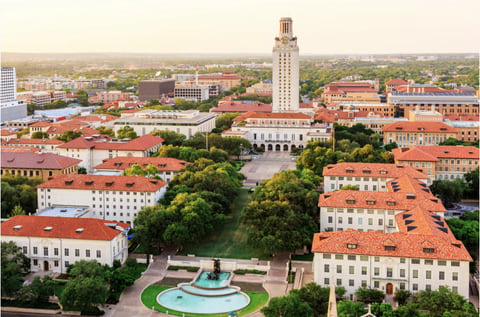
The University of Texas at Austin Department of Chemistry Austin, Texas, United States
Advisor: Prof. Carlos R. Baiz
Building surface-specific ultrafast vibrational spectroscopy of electrified interfaces. I measure hydrogen-bond dynamics of water at plasmonic electrode surfaces by surface-enhanced two-dimensional infrared spectroscopy, and study how plasmonic nanocrystal metasurfaces and optical cavities alter molecular vibrational behaviour.
- Showed by SEIRAS and constant-potential molecular dynamics that DMSO acts as a hydrogen-bond network disruptor at gold electrodes, and that negative potential drives its enrichment at the surface.
- Used surface-enhanced 2D IR to show that small cosolvent fractions accelerate interfacial hydrogen-bond exchange from roughly 10 ps to about 2 ps, while the same mixtures slow bulk water dynamics.
- Demonstrated with broadband 2D IR that a tunable indium tin oxide metasurface accelerates the vibrational dynamics of an overlying polymer by up to sevenfold and opens directional energy-transport channels.
- Co-authoring an invited Chemical Reviews article on two-dimensional infrared spectroscopy in complex environments, and a book chapter on DMSO interactions.
- November 2023 — November 2024 1 year
Appointment
Postdoctoral Researcher
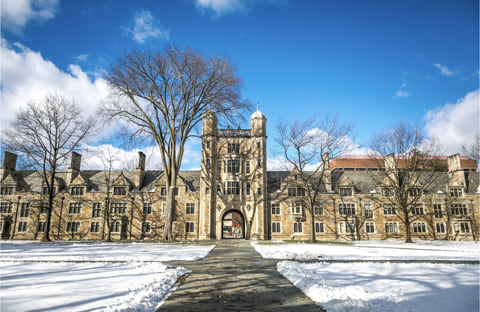
University of Michigan Department of Chemistry Ann Arbor, Michigan, United States
Advisor: Prof. Kevin J. Kubarych
Worked on enzyme catalysis under vibrational strong coupling — placing environmentally and biologically relevant reactions inside an optical cavity and asking, with 2D IR as the readout, whether hybridising a molecular vibration with a cavity mode changes how the reaction proceeds.
- Applied 2D IR spectroscopy to enzyme-catalysed reactions under vibrational light–matter strong coupling inside Fabry–Pérot microcavities.
- Developed the cavity-based experimental grounding that now underpins my proposed work on polaritonic control of reactivity.
- March 2019 — August 2023 4 yr 5 mo
Appointment
Research Professor
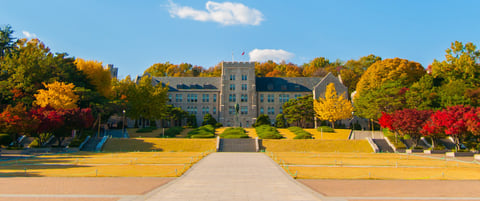
Korea University Center for Molecular Spectroscopy and Dynamics, Institute for Basic Science Seoul, South Korea
Advisor: Prof. Minhaeng Cho
Four and a half years across four connected problems: water structure in biocompatible polymers and hydrogels, free-volume elements in amorphous polymers, ion transport in lithium-ion electrolytes and separators, and a new wavelet-based denoising method for ultrafast spectroscopy. This is where my work moved from noncovalent interactions in bulk liquids toward confined and functional environments.
- Mapped the adsorbed water structure on highly and poorly biocompatible acrylate polymers, showing that distinct fast and slow water populations track antifouling behaviour. Selected as the journal cover.
- Recast the wobbling-in-a-cone model by separating a probe's internal bond rotation from whole-molecule diffusion, giving accurate free-volume element sizes in amorphous polymers.
- Showed that nanoconfinement within a polypropylene separator restructures lithium solvation, raising contact ion pairing and suppressing ionic conductivity by roughly eightfold to ninefold.
- Developed discrete wavelet transform denoising to improve signal-to-noise in ultrafast spectroscopy.
- Resolved hidden Fermi resonances in azide-derivatised amino acids by 2D IR, producing design guidance for cleaner biological infrared probes.
- August 2018 — September 2018 1 month
Visiting position
Visiting Researcher
RIKEN Molecular Spectroscopy Laboratory Wako, Saitama, Japan
Advisor: Prof. Tahei Tahara
A short visiting appointment using heterodyne-detected vibrational sum frequency generation spectroscopy to study how DNA reorganises water at lipid membrane interfaces — my first work on a genuinely interfacial, rather than bulk, system.
- Studied DNA-induced reorganisation of water at lipid membrane interfaces by heterodyne-detected vibrational sum frequency generation spectroscopy.
Education
Degrees
- January 2013 — December 2018 5 yr 11 mo
Degree
PhD, Chemistry
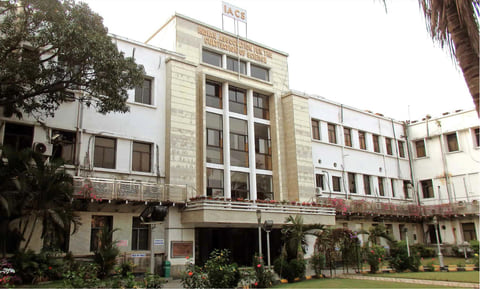
Indian Association for the Cultivation of Science Department of Spectroscopy Kolkata, India
Thesis advisor: Prof. Prashant Chandra Singh
Awarded by: University of Calcutta
Thesis: Role of Weak Noncovalent Interactions in the Solvation and Photophysical Properties of Atmospherically and Biologically Relevant Molecules
Doctoral work combining infrared spectroscopy, molecular dynamics simulation and quantum chemistry to understand weak noncovalent interactions — organic fluorine as a hydrogen-bond acceptor, dispersive fluorous contacts, and the unconventional bonding in hydrated carbonyl sulfide clusters. Fourteen publications, including several as first author.
- Showed that organic fluorine acts as a weak but genuine hydrogen-bond acceptor that reshapes the network of bulk fluorinated alcohols.
- Established that dispersive fluorine–fluorine interactions, not hydrogen bonding, govern solvation dynamics around perfluorinated solutes.
- Demonstrated that water binds carbonyl sulfide through charge-shifted noncovalent interactions rather than conventional hydrogen bonds.
- Best poster award in photochemistry, 14th DAE-BRNS Biennial Conference on Radiation and Photochemistry, 2018.
- July 2011 — May 2013 1 yr 10 mo
Degree
MSc, Physical Chemistry
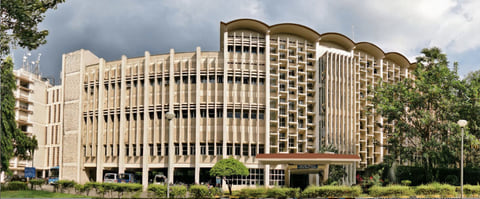
Indian Institute of Technology Bombay Mumbai, India
Result: CGPA 8.44
Master's training in physical chemistry at IIT Bombay, entered through the Joint Admission Test for MSc with an all-India rank of 73.
- Ranked 73 in the Joint Admission Test for MSc in the IITs, 2011.
- July 2008 — June 2011 2 yr 11 mo
Degree
BSc (Hons.), Chemistry
Ramakrishna Mission Vidyamandira Belur Math, West Bengal, India
Result: 67.13%
Undergraduate chemistry at Ramakrishna Mission Vidyamandira, supported by an INSPIRE scholarship from the Government of India.
- INSPIRE Scholarship, Department of Science and Technology, Government of India.